


.png)

The Nodulus Technique
Precision Strategies for Visual-Labyrinthine-Otolthic Recalibration
August 15-16, 2026
Minnetonka, Minnesota
A 15-hour, two-day intensive exploring nodulus-centered vestibular integration, translational VOR, gravity perception, and precision rehabilitation strategies for complex neurological patients.
$
$
(
$
<svg xmlns="http://www.w3.org/2000/svg" fill="none" viewBox="0 0 101 100"><path stroke="currentColor" stroke-linecap="round" stroke-linejoin="round" stroke-width="6" d="M21.166 56.25H79.5m-29.167 0V100M27.417 45.833v-18.75h-4.884a12.5 12.5 0 0 0-12.108 9.396L2.417 67.71v1.04h29.166V75c0 6.25 0 10.418 3.125 16.668 0 0 3.125 6.25 7.292 6.25m31.25-52.084v-18.75h4.883a12.5 12.5 0 0 1 12.109 9.396l8.008 31.23v1.04H69.083V75c0 6.25 0 10.418-3.125 16.668 0 0-3.125 6.25-7.291 6.25M26.79 18.75s-6.666-4.167-6.666-9.375a7.283 7.283 0 0 1 14.566 0c0 5.208-6.65 9.375-6.65 9.375h-1.25Zm47.084 0s6.666-4.167 6.666-9.375a7.291 7.291 0 0 0-7.291-7.292c-4.025 0-7.275 3.267-7.275 7.292 0 5.208 6.65 9.375 6.65 9.375h1.25Z"/></svg>
Course Description
This 15-hour, two-day intensive immerses clinicians in the Nodulus System™, a comprehensive clinical framework for evaluating and rehabilitating disorders of gravity perception, gaze stability, vestibular-visual integration, and multisensory weighting. Drawing from cerebellar neurophysiology, otolithic processing, translational vestibulo-ocular reflex (t-VOR), and dynamic neck proprioception, participants will learn how nodulus and ventral uvula dysfunction presents across concussion, PPPD, vestibular migraine, and neurodegenerative conditions. Emphasis is placed on low-tech, high-precision bedside examination, six-degrees-of-freedom assessment, and staged rehabilitation strategies that progress from reflexive brainstem control to cortical integration. Through hands-on demonstrations, case-based reasoning, and layered rehabilitation progressions, clinicians will gain practical tools to address unstable gaze, velocity storage abnormalities, autonomic dysregulation, and impaired spatial orientation in complex neurological cases.
What you’ll learn:
- Perform six-degree-of-freedom assessments to evaluate nodulus and ventral uvula function.
- Differentiate rotational and translational vestibulo-ocular reflex dysfunction for lesion localization.
- Identify gravity-dependent and gravity-independent nystagmus patterns and their clinical implications.
- Integrate vestibular, visual, proprioceptive, and autonomic findings into a unified neurological model.
- Design progressive rehabilitation strategies targeting gaze stability, spatial orientation, and postural control.
The Nodulus class was an inspiration for me clinically. The clinic is amazing, a wealth of knowledge, information and application. The unique style of clinical application, refresher on technical and examination aspects any functional neurologist needs to master, and clinical troubleshooting thought process Dr. Schmoe offers are a must for anyone that wants to elevate their knowledge and understanding of clinical neuroscience. I highly recommend the course!
-John McClaren D.C, D.A.C.N.B.
More About This Course
Visual and vestibular dysfunction represents one of the most challenging diagnostic territories in clinical practice, where traditional assessment methods often fall short of identifying subtle labyrinthine and otolithic irregularities that profoundly impact patient function. The intricate relationship between visual processing, vestibular calibration, and spatial orientation requires precision techniques that go beyond conventional approaches to achieve meaningful therapeutic outcomes.
The Nodulus Technique emerges as a breakthrough methodology for visual-labyrinthine-otolithic recalibration, offering clinicians advanced strategies to address complex vestibular presentations with unprecedented accuracy. This comprehensive training provides the specialized knowledge and hands-on skills necessary to identify, assess, and treat sophisticated vestibular dysfunction patterns that traditional methods frequently miss or inadequately address.This course is designed for licensed healthcare professionals seeking to expand their diagnostic capabilities in vestibular rehabilitation, including physical therapists, occupational therapists, chiropractors, and other clinicians working with balance, dizziness, and spatial orientation disorders. Whether you're treating post-concussion syndrome, age-related balance decline, or complex vestibular presentations, this training elevates your clinical precision and patient outcomes.
Delivered through the Carrick Institute's renowned evidence-based educational framework, this program combines cutting-edge neuroscience research with immediately applicable clinical techniques. Our expert instruction ensures you gain not only theoretical mastery but also the practical competency to implement these advanced recalibration strategies effectively in your clinical practice, positioning you at the forefront of vestibular rehabilitation innovation.
Components
Educational Syllabus
- Foundations of the Nodulus System
- Historical development, clinical rationale, and systems-based approach to nodular function.
- Vestibular-Cerebellar Neuroanatomy
- Nodulus, ventral uvula, flocculus, fastigial nucleus, and velocity-storage mechanisms.
- Gravity Perception & Otolith Processing
- Tilt-translation ambiguity, graviceptive pathways, and internal models of self-motion.
- Rotational vs Translational VOR
- r-VOR vs t-VOR latency, gain modulation, target distance effects, and clinical testing.
- Six Degrees of Freedom Assessment
- Translational planes, rotational axes, depth, and velocity-based examination strategies.
- Ocular Motor Integration
- Saccades, pursuits, fixation, vergence, OKN, and neural integrator dysfunction.
- Velocity Storage & Nystagmus Patterns
- DBN, UBN, PAN, skew deviation, ocular torsion, and lesion localization.
- Dynamic Neck Proprioception
- Cervical-vestibular integration, efference copy, and postural influence on gaze.
- Autonomic & Glymphatic Considerations
- CSF flow, trigeminal influences, metabolic factors, and autonomic stability.
- Clinical Bedside Examination
- Eyes-open vs eyes-closed testing, fixation suppression, head thrusts, translations, and gait.
- Translational Platforms & Motion Exposure
- Slow vs fast motion, passive vs active translation, and sensory mismatch desensitization.
- Vergence & Depth Rehabilitation
- Near-far training, vergence-VOR coupling, and posture-dependent eye alignment.
- Nodular Rehabilitation Strategies
- Slow nodulus-based protocols, body-based activation, and cross-axis adaptation.
- Complex Case Integration
- Concussion, PPPD, vestibular migraine, neurodegeneration, and unstable patients.
- Clinical Practicum & Progression
- Building layered rehab plans, reassessment strategies, and real-world application.
Live Event Info
schedule & location
Date(s):
Schedule:
Saturday: 9:00 AM to 6:00 PM
Sunday: 9:00 AM to 3:00 PM
Event Location:
Time Zone:
Dress Code:
Venue
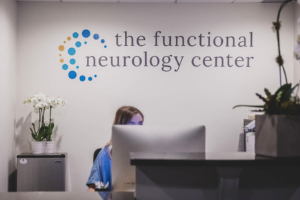
The Functional Neurology Center
11055 Wayzata Blvd
Minnetonka, MN 55305
USA
Venue-Specific Details:
Access Info:
Parking Info:
Phone:
Airport:
Suggested hotels
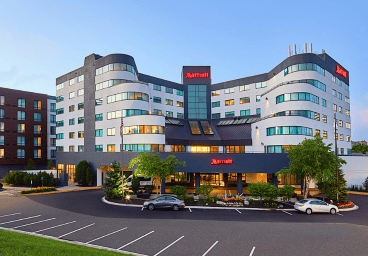
Minneapolis Marriott West
960 Wayzata Boulevard
Minneapolis, MN 55426
USA
Phone:
+ 1-952-544-4400Reservation Note:
Also includes
The Nodulus Technique
A 15-hour, two-day intensive exploring nodulus-centered vestibular integration, translational VOR, gravity perception, and precision rehabilitation strategies for complex neurological patients.
$
$
(
$
<svg xmlns="http://www.w3.org/2000/svg" fill="none" viewBox="0 0 101 100"><path stroke="currentColor" stroke-linecap="round" stroke-linejoin="round" stroke-width="6" d="M21.166 56.25H79.5m-29.167 0V100M27.417 45.833v-18.75h-4.884a12.5 12.5 0 0 0-12.108 9.396L2.417 67.71v1.04h29.166V75c0 6.25 0 10.418 3.125 16.668 0 0 3.125 6.25 7.292 6.25m31.25-52.084v-18.75h4.883a12.5 12.5 0 0 1 12.109 9.396l8.008 31.23v1.04H69.083V75c0 6.25 0 10.418-3.125 16.668 0 0-3.125 6.25-7.291 6.25M26.79 18.75s-6.666-4.167-6.666-9.375a7.283 7.283 0 0 1 14.566 0c0 5.208-6.65 9.375-6.65 9.375h-1.25Zm47.084 0s6.666-4.167 6.666-9.375a7.291 7.291 0 0 0-7.291-7.292c-4.025 0-7.275 3.267-7.275 7.292 0 5.208 6.65 9.375 6.65 9.375h1.25Z"/></svg>
The Carrick Institute team is ready to assist with enrollment, CE approval, or program planning. Email visit our CE Portal or Contact Us directly.