.png)

TMD: Clinical Neurology and Examination
A neurology-informed framework for evaluating and managing temporomandibular dysfunction in clinical practice
Gain a neurologically grounded clinical system for diagnosing and managing TMD, from joint mechanics to referred pain and manual therapy.
$
$
(
$
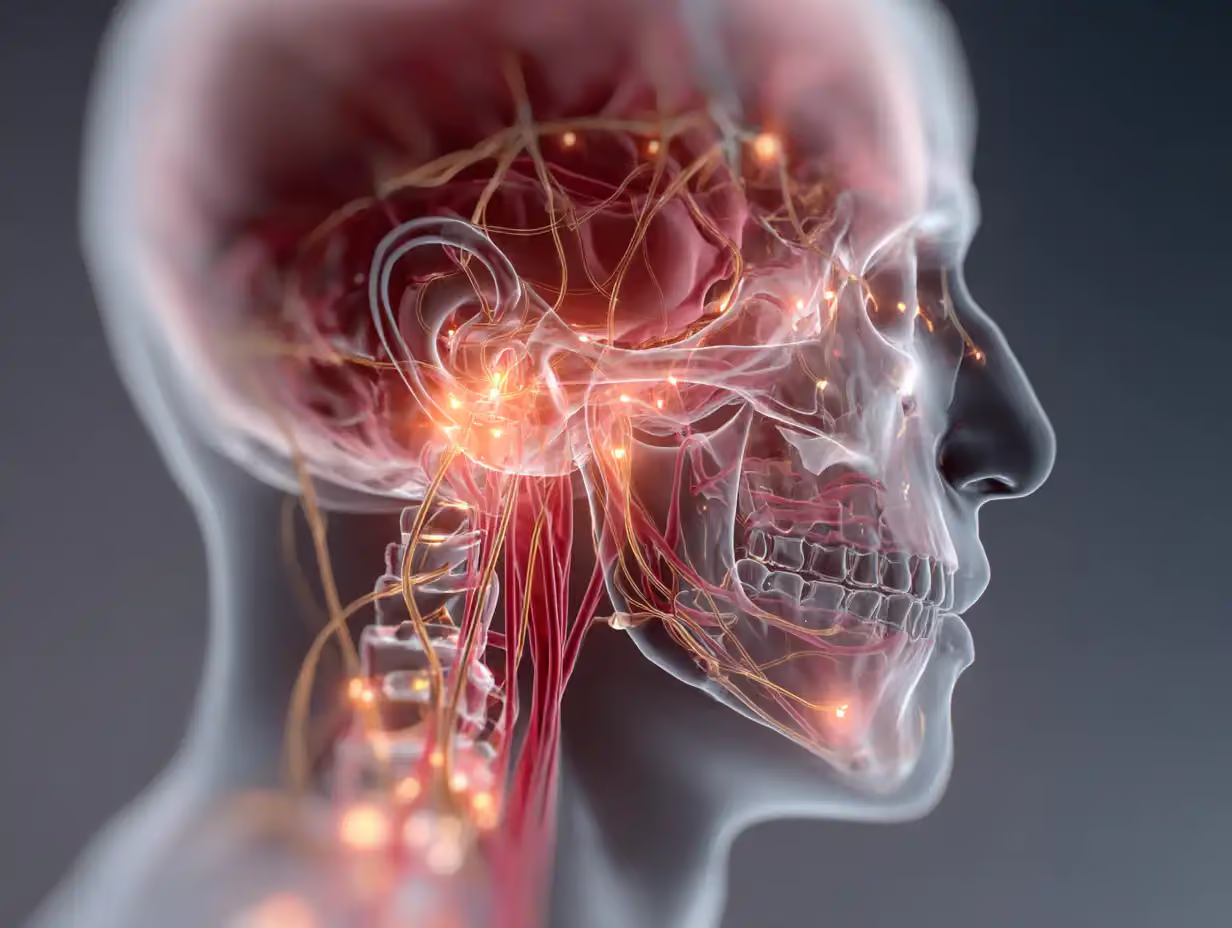
Course Description
Temporomandibular dysfunction affects up to 12% of the population, yet most clinical training leaves practitioners without a structured, neurologically informed framework for evaluation and management. The result is patients cycling through providers without a clear diagnosis or coordinated care plan.
This course delivers a comprehensive clinical system built around evidence-based examination, neurological pain science, and hands-on management strategies. Clinicians gain the anatomical depth, diagnostic precision, and treatment tools to confidently assess intracapsular and extracapsular TMJ pathology, differentiate serious referral sources, and apply targeted interventions from myofascial release to cervical integration. Eight hours of structured learning designed for the practitioner who is ready to close the gap between symptom presentation and clinical resolution.
What you’ll learn:
- Apply a 10-step TMJ examination protocol to differentiate intracapsular from extracapsular pathology
- Interpret mandibular range of motion and gait patterns to identify disc and muscle dysfunction
- Recognize serious referred pain sources including vascular, neoplastic, and pulmonary origins
- Integrate cervical spine evaluation and management into a comprehensive TMD clinical approach
- Select and apply manual therapy, postural rehabilitation, and patient education for TMD outcomes
More About This Course
Temporomandibular disorders represent one of the most clinically underserved presentations in musculoskeletal and neurological practice. With a population prevalence approaching 12%, TMD generates a complex overlap of orofacial pain, cervical dysfunction, headache, and referred pain that routinely confounds standard diagnostic approaches. Yet the evidence base for structured, multidisciplinary clinical management of TMJ dysfunction has never been stronger. This course positions licensed clinicians to lead that evaluation with confidence.
TMD: Clinical Neurology and Examination delivers an 8-hour, evidence-based training program built around the full clinical arc of TMJ assessment and management. Beginning with foundational anatomy and neurological pain science, the curriculum moves through a systematic physical examination protocol, including the proprietary Illes-10 TMJ Examination Checklist, mandibular range of motion assessment, joint load testing, cranial nerve evaluation, and intraoral and extraoral muscle palpation. Clinicians then progress through differential diagnosis of pain referral sources, including vascular, neoplastic, pulmonary, and otologic origins, before applying targeted management strategies that integrate cervical spine intervention, myofascial techniques, postural rehabilitation, and patient education.
This course is designed for chiropractors, physical therapists, and other licensed manual therapy clinicians who regularly encounter patients with jaw pain, craniofacial pain, headache, or cervical dysfunction and who recognize that a more sophisticated diagnostic framework will meaningfully change patient outcomes. No dental background is required. The content is calibrated for clinicians who already understand musculoskeletal examination and are ready to extend that competency into the craniofacial region.
Dr. Jennifer Illes brings an exceptionally rare combination of clinical credentials to this training: practicing chiropractor, registered nurse, medical acupuncturist, and Assistant Professor with two master's degrees in applied clinical neuroscience and health services administration. Her approach integrates neurological rigor with practical, hands-on clinical skill, providing a framework that is immediately applicable to real patient presentations from the first session forward.
Components
Educational Syllabus
- The Architecture of the TMJ: Anatomy That Drives Clinical Decisions
- Build the anatomical foundation every diagnostic decision depends on. Master articular surfaces, disc mechanics, ligament function, and synovial compartments to read clinical presentations with precision and confidence.
- The Neuroscience of Jaw Pain: Why Location Is Never the Whole Story
- Move beyond site-based thinking into a neurologically sophisticated model of TMD pain. Understand primary versus heterotopic pain, central sensitization, trigeminal pathways, and the cervical-orofacial relationship.
- Red Flags and Referral Sources: What Cannot Be Missed
- Develop the vigilance to distinguish TMD from serious referral sources. Cardiac ischemia, giant cell arteritis, pulmonary lesions, nasopharyngeal tumors, and carotidynia carry distinct presentations every clinician must recognize and act on.
- The Complete History: Building the Diagnostic Picture Before You Touch
- Understand why TMD history-taking demands a broader lens than standard MSK intake. Integrate dental history, psychological screening, functional limitation scales, sleep assessment, and systemic review into a coherent diagnostic picture.
- Global and Cervical Examination: Where TMD Assessment Begins
- Establish the postural and cervical foundation that shapes every downstream TMD finding. Apply cervical ROM testing, cranial nerve examination, carotid auscultation, and postural analysis as essential components of the craniofacial clinical picture.
- The Illes-10: A Systematic Protocol for TMJ Examination
- Execute a structured 10-step TMJ examination with clinical precision. From mandibular gait and load testing to intraoral palpation and tongue depressor testing, gain a reproducible protocol separating intracapsular from extracapsular pathology.
- Global and Cervical Management: Treating the System Behind the Joint
- Apply evidence-based cervical and postural interventions that influence TMJ outcomes. Explore upper cervical manipulation, deep neck flexor facilitation, spray and stretch, myofascial release, the Rocabado 6x6 protocol, and therapeutic progressions.
- Intraoral and Extraoral Management: Hands-On Techniques That Resolve Cases
- Master the hands-on techniques that drive clinical resolution in TMD. Cover extraoral and intraoral muscle release, biofeedback, occlusal splint principles, dry needling, elastic taping, and a clear framework for surgical and specialist referral.
Venue, Hotels & Schedule
Also includes

TMD: Clinical Neurology and Examination
Gain a neurologically grounded clinical system for diagnosing and managing TMD, from joint mechanics to referred pain and manual therapy.
$
$
(
$
The Carrick Institute team is ready to assist with enrollment, CE approval, or program planning. Email visit our CE Portal or Contact Us directly.